Implant-supported dentures and All-on-X can both replace a complete upper or lower arch using dental implants. The main difference is simple: an implant-supported denture is usually removable by the patient, while an All-on-X restoration is fixed in place.
That difference affects how the teeth feel, how you clean them, what maintenance they may need, and how treatment is planned. Neither option is automatically better for everyone. The right choice depends on your anatomy, health, goals, ability to maintain the restoration, and budget.
Implant-supported dentures vs. All-on-X at a glance
| Question | Implant-supported dentures | All-on-X |
|---|---|---|
| Does it come out? | Yes. You remove it at home for cleaning. | No. It stays fixed and is removed by a dental professional when needed. |
| How does it attach? | It snaps or clips onto implant attachments or a supporting bar. | A full-arch restoration is secured to implants. |
| Does it rest on the gums? | Some designs receive support from both the implants and gum tissue. | The restoration is supported by the implants rather than worn like a removable denture. |
| How is it cleaned? | Remove it and clean both the denture and implant attachments. | Brush and clean underneath and around the fixed restoration with the recommended tools. |
| How stable is it? | More secure than a conventional denture, but it is still removable. | Fixed in place and designed to function as a complete arch of replacement teeth. |
| What affects the cost? | Implant count, attachments, denture design, preparatory procedures, and maintenance. | Implant count, surgical needs, temporary and final restorations, materials, and laboratory work. |
Dental terminology is not always used consistently. Some offices use “implant-supported dentures” as a broad label for any full arch attached to implants, including fixed teeth. The American College of Prosthodontists recommends describing implant restorations by whether the patient can remove and reseat them. When you compare plans, ask one direct question: Will I take these teeth out myself, or will they stay fixed in my mouth?
What are implant-supported dentures?
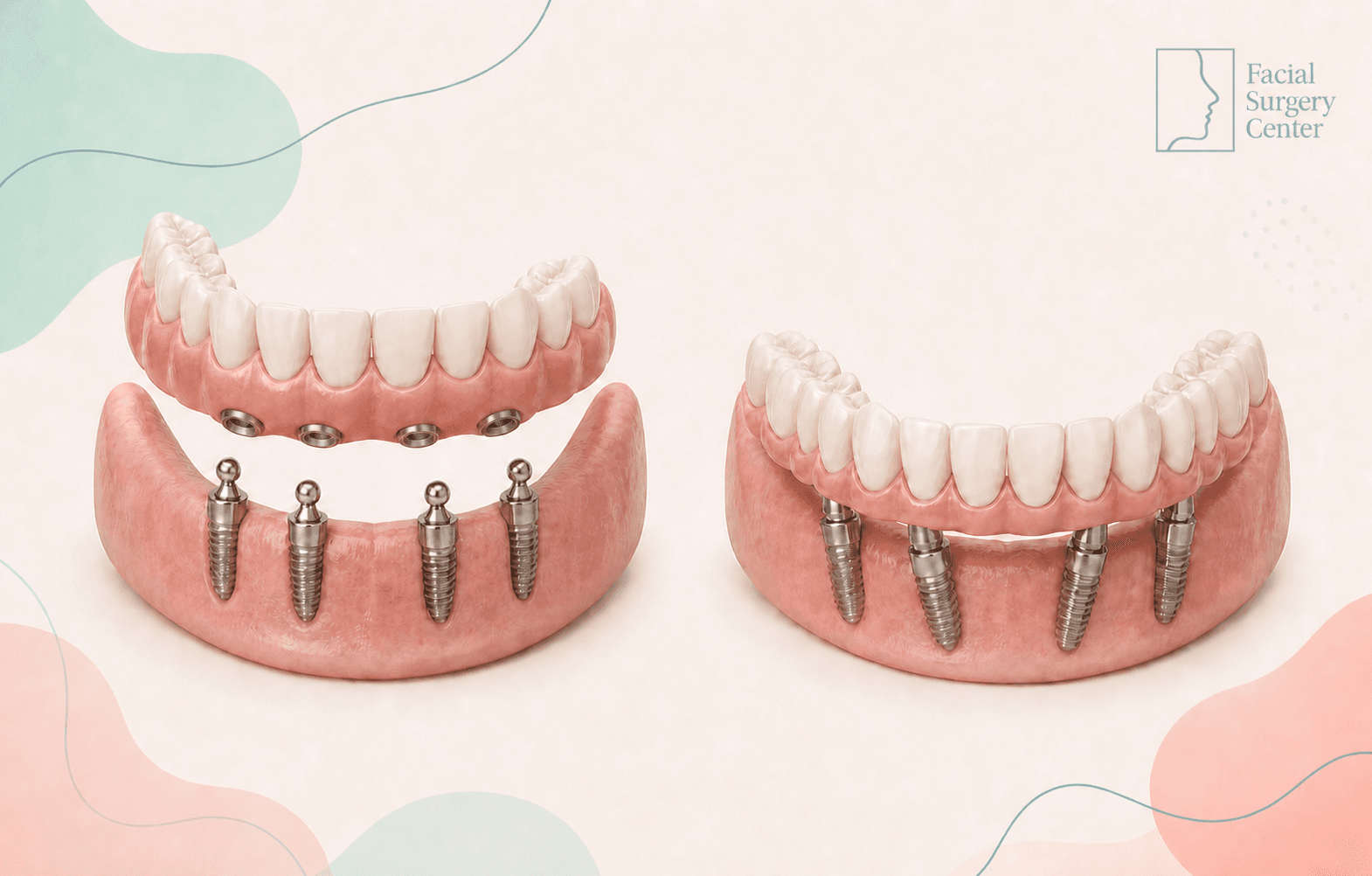
An implant-supported denture, also called an implant-retained denture, overdenture, or snap-in denture, is a removable set of replacement teeth that attaches to dental implants. Small attachments or a bar help hold the denture in position, so it does not rely only on suction or adhesive.
The goal is greater stability than a conventional denture. The denture should resist the lifting and movement that can make eating or speaking frustrating. You can still remove it to clean the prosthesis, the gums, and the implant attachments.
The exact design varies. Some dentures receive support from both the implants and gum tissue. Others are designed to receive more support from the implants. The number and location of implants, attachment type, available bone, and shape of the jaw all influence the plan.
The American Association of Oral and Maxillofacial Surgeons explains that implant-retained dentures attach to implants in the jaw and can be snapped off by the patient. It also describes the usual coordination between the oral and maxillofacial surgeon who places the implants and the dentist who makes or adjusts the denture.
When implant-supported dentures may make sense
This option may be considered when you:
- Are missing all or most teeth in one arch
- Have a conventional denture that slips, rocks, or requires adhesive
- Want more stability but still prefer a removable restoration
- Want to take the teeth out for direct cleaning
- Need a treatment plan that balances function with budget
- Have anatomy or facial-support needs that may favor a denture-based design
These are reasons to ask about treatment, not proof that you are a candidate. Implant health depends on adequate bone, healthy tissue, medical risk assessment, and a maintenance plan you can follow.
What is All-on-X?
All-on-X dental implants support a fixed full-arch restoration for people with many missing or failing teeth. “X” means the surgeon selects the number and position of implants according to the treatment plan rather than assuming one implant count is right for everyone.
The replacement arch stays attached to the implants. You do not remove it at night or take it out to clean. A dental professional can remove it when examination, repair, or maintenance requires access.
Selected patients may receive a temporary fixed restoration around the time the implants are placed. That does not mean every patient can receive fixed teeth immediately or that the first restoration is the final one. Implant stability, bone quality, bite forces, healing needs, and the extent of any extractions or grafting all affect the sequence.
When All-on-X may make sense
This option may be considered when you:
- Are losing or have lost most teeth in an upper or lower arch
- Want replacement teeth that stay fixed
- Prefer a restoration that feels less like a removable denture
- Can perform detailed cleaning around and beneath a fixed full arch
- Understand that professional maintenance remains necessary
- Have anatomy and health factors that support the surgical plan
All-on-X is not a maintenance-free set of permanent teeth. The implants, gum tissue, bite, screws, and restoration still need regular evaluation. A fixed design also requires enough space for you to clean around the implant connections.
The biggest difference is removable vs. fixed
Patients often focus first on the number of implants. Daily life is usually easier to understand if you focus first on whether the restoration comes out.
With an implant-supported denture, you remove the teeth for cleaning. That gives you direct access to the underside of the denture and implant attachments. The tradeoff is that it remains a removable appliance. Attachments can wear, and the denture may need adjustments, relining, or replacement as the mouth changes.
With All-on-X, the teeth remain fixed. Many patients value that security and the absence of a removable denture. Cleaning underneath the arch takes more technique and may require floss threaders, interdental brushes, or an oral irrigator as directed by the dental team. The restoration can also need professional repair or removal over time.
Research comparing fixed and removable full-arch implant restorations has not found one design that wins every category for every person. A systematic review of fixed restorations and removable overdentures identified bone, implant position, bite, cost, treatment time, cleaning, speech, comfort, and appearance as factors that should be considered before treatment.
Which option feels and functions more like natural teeth?
A fixed All-on-X restoration generally provides the closer match to the experience of teeth that stay in place. It does not lift out when you chew, and you do not remove it at night. That can make it appealing to someone who does not want to manage a removable appliance.
An implant-supported denture can still be a major improvement over a loose conventional denture. The implant attachments help control movement and improve retention. Because the denture can be removed, it may also be easier for some patients or caregivers to clean thoroughly.
Neither restoration recreates natural teeth exactly. Sensation is different, food can collect around or beneath either design, and both require new cleaning habits. Speech and chewing usually need an adjustment period. Your expectations should include that learning curve rather than only the appearance of the final teeth.
How cleaning and maintenance differ
Both options require daily home care and long-term professional follow-up. The cleaning routine is different.
Cleaning an implant-supported denture
A typical routine includes:
- Removing the denture according to the dentist's instructions.
- Cleaning the denture without damaging its attachment components.
- Brushing the gums, tongue, and implant attachments.
- Checking for soreness, looseness, or worn attachments.
- Attending visits for relines, attachment replacement, and evaluation of the implants.
Do not assume a product that is safe for conventional dentures is safe for implant attachments. Abrasive toothpaste, harsh cleaners, and improper soaking can damage some materials. Follow the instructions for your particular restoration.
Cleaning All-on-X
A fixed full arch is brushed in the mouth. You also need to clean where the restoration meets the gums and in the space beneath it. Your care team may recommend a combination of:
- A soft manual or electric toothbrush
- Interdental brushes sized for the available spaces
- Specialized floss or floss threaders
- An oral irrigator
- More frequent professional hygiene based on your risk factors
Fixed does not mean self-cleaning. If you cannot reach important areas because of the restoration's shape or limited hand dexterity, that should be addressed during planning rather than discovered after treatment.
Bone, health, and surgical planning
Both treatments begin with an examination and imaging. The surgeon evaluates bone height, width, density, sinus and nerve locations, existing teeth, infection, gum health, and how the jaws meet. Medical history, medications, tobacco use, and conditions that affect healing also matter.
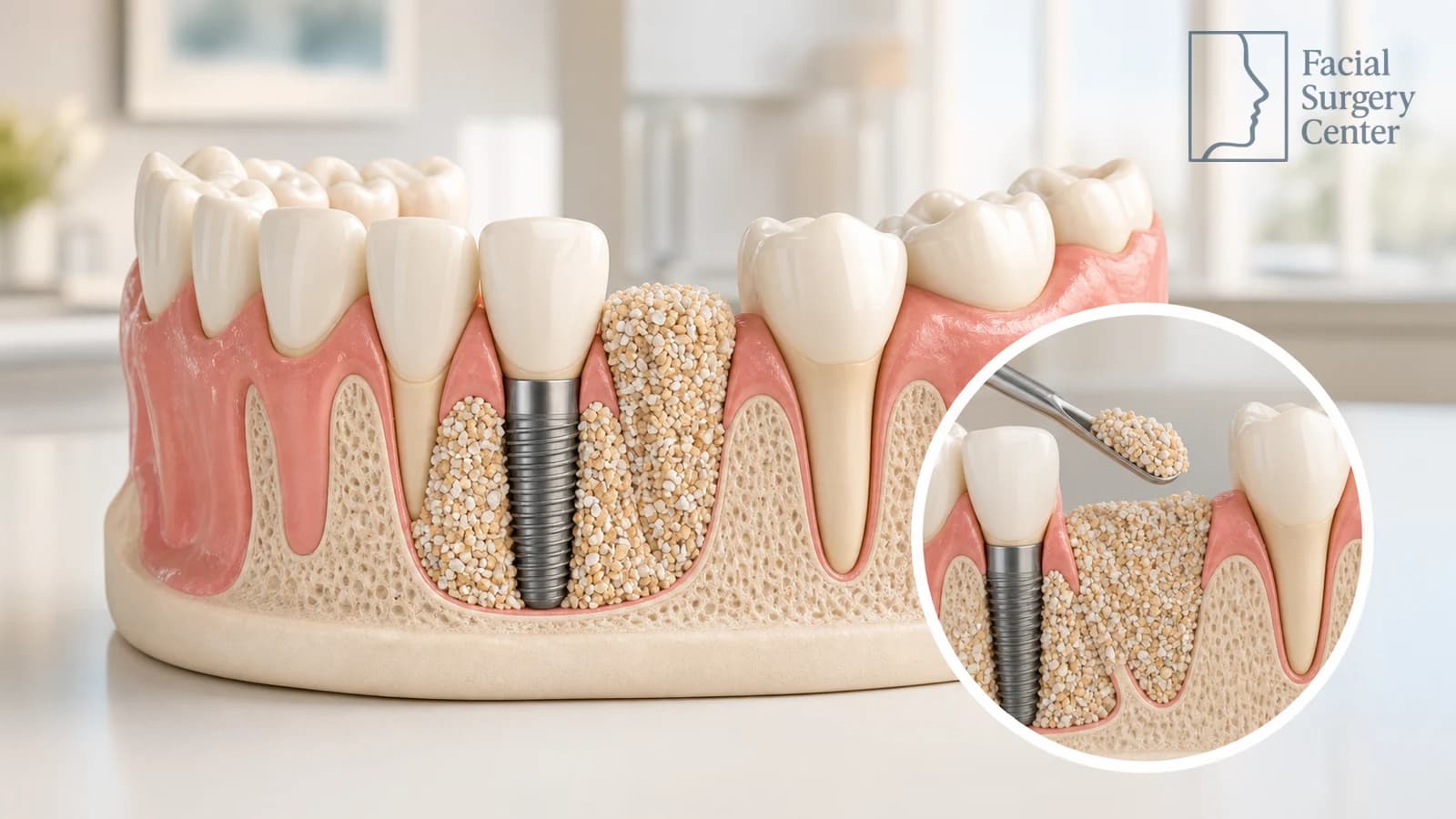
Neither option automatically eliminates the need for bone grafting. Implant position and available bone may allow a plan without grafting in some cases. Other patients need a graft before or during implant placement. A claim that one technique “never needs bone grafting” should be treated cautiously.
The restorative plan should be established before implants are placed. Implant location that works for a removable denture may not be ideal for a fixed full arch, and the reverse can also be true. Planning the teeth first helps the surgical and restorative teams place implants where they can support the intended result.
Implant-supported dentures vs. All-on-X cost factors
There is no responsible way to compare the cost from the treatment names alone. A removable implant-supported denture often has a lower initial cost than a fixed full-arch restoration, but that is not true in every situation.
The total can be affected by:
- Examinations and 3D imaging
- The number and type of implants
- Tooth extractions or treatment of infection
- Bone grafting or other preparatory surgery
- Anesthesia or sedation
- Temporary teeth during healing
- Attachment systems or a supporting bar
- The materials used for the final denture or fixed restoration
- Dental laboratory work
- Repairs, relines, attachment replacement, and professional maintenance
- Dental or medical insurance coverage
Ask for a written plan that separates the surgical phase, temporary restoration, final restoration, and expected maintenance. A lower starting estimate may not include every phase. A higher estimate may include services that another quote leaves out.
Cost matters, but it should be considered alongside cleaning ability, repair needs, anatomy, and what you expect the teeth to feel like. Choosing a restoration that you cannot maintain can become more expensive and less healthy over time.
When conventional dentures may still be reasonable
Dental implants are not the only way to replace a complete arch. A conventional denture can be reasonable when someone wants to avoid implant surgery, is not medically ready for surgery, needs a lower initial cost, or prefers to begin with a removable option.
The tradeoff is that conventional dentures rely on the gums, jaw shape, suction, and sometimes adhesive for retention. They can move more during chewing and may require adjustments as the jaw changes. Implant-supported options add stability, but they also add surgery, healing, cost, and implant maintenance.
A consultation should include the option of doing less treatment when that option can meet your needs. The right plan is not always the most complex one.
What treatment usually involves
The sequence depends on the condition of the teeth and bone, but full-arch implant treatment commonly includes:
- Consultation and imaging. The team reviews your health, goals, existing teeth, jawbone, and bite.
- Restorative planning. The design of the future teeth guides implant number and position.
- Preparatory treatment. Teeth may need to be removed, infection treated, or bone rebuilt.
- Implant placement. The implants are placed according to the coordinated surgical and restorative plan.
- Healing and temporary teeth. You may use a temporary denture or provisional restoration while the implants integrate.
- Final restoration. The removable denture or fixed arch is made and adjusted after the appropriate healing milestones.
- Maintenance. The implants, attachments, restoration, bite, and surrounding tissue are monitored over time.
Some stages can be combined. Others must be separated to allow healing. Be cautious with any promise that reduces a complex plan to one appointment before the clinician has reviewed your imaging.
Questions to ask at your consultation
Bring these questions when comparing implant-supported dentures vs. All-on-X:
- Will the proposed teeth be removable by me or fixed in place?
- Why does this design fit my anatomy and goals?
- Who will place the implants, make the restoration, and provide long-term maintenance?
- How many implants are recommended, and what does each one support?
- Do I need extractions or bone grafting?
- Will I have temporary teeth during healing?
- What will daily cleaning require?
- Which parts of the treatment estimate are surgical and which are restorative?
- What repairs or replacement parts may be needed later?
- If an implant does not integrate, how would the plan change?
- Could this implant arrangement support a different type of restoration in the future?
The answers should make the complete process understandable. You should know not only what is being recommended, but also why it fits your situation better than the alternatives.
The short answer
When comparing implant-supported dentures vs. All-on-X, start with the practical distinction. Implant-supported dentures are usually removable and snap onto implants. All-on-X is a fixed full-arch restoration that stays in place.
The decision then comes down to anatomy, health, stability, cleaning, maintenance, treatment complexity, and cost. There is no universal winner. The strongest plan is the one developed after the surgical and restorative teams review the same goal and the same imaging.
If you are considering full-arch tooth replacement, learn more about dental implants and Teeth in a Day with All-on-X. You can also schedule a consultation with our Trumbull oral surgery team to review your jawbone, discuss the surgical options, and understand how implant placement would fit into a coordinated restorative plan.